Adding Models
Learn how to add your 3D data to a Campfire project.
Add a model to the scene
Add a model by clicking on the 📁 icon in the top bar or by simply dragging and dropping a file from your file picker.
Campfire supports 40+ file formats of 3D CAD and scans. The model will be processed in the Campfire cloud and appear in the center of the scene when done. Processing time varies and depends on both your internet speed and model size.
On Desktop
On Meta Quest
Exporting from specific software
Renaming scenes
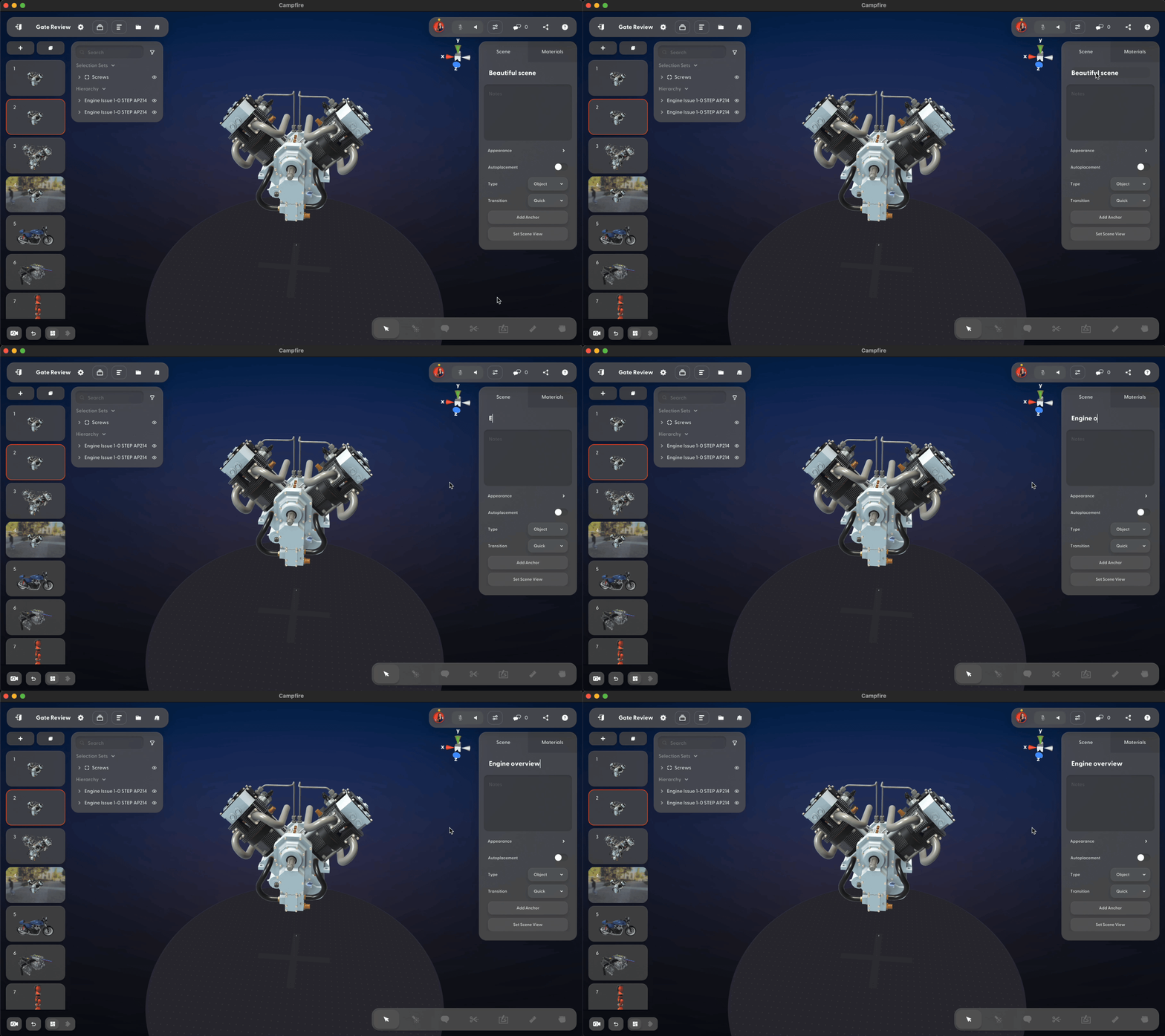
To rename a scene, click on the scene name within the inspector. Type the new name and then click anywhere or press enter to save the change.
Editing scenes
Once your model is added to a scene, use a variety of Campfire tools to move, rotate, scale your models, adjust materials and create detailed scenes.
On desktop and iPad
On Meta Quest and HTC VIVE
Move, scale, and rotate
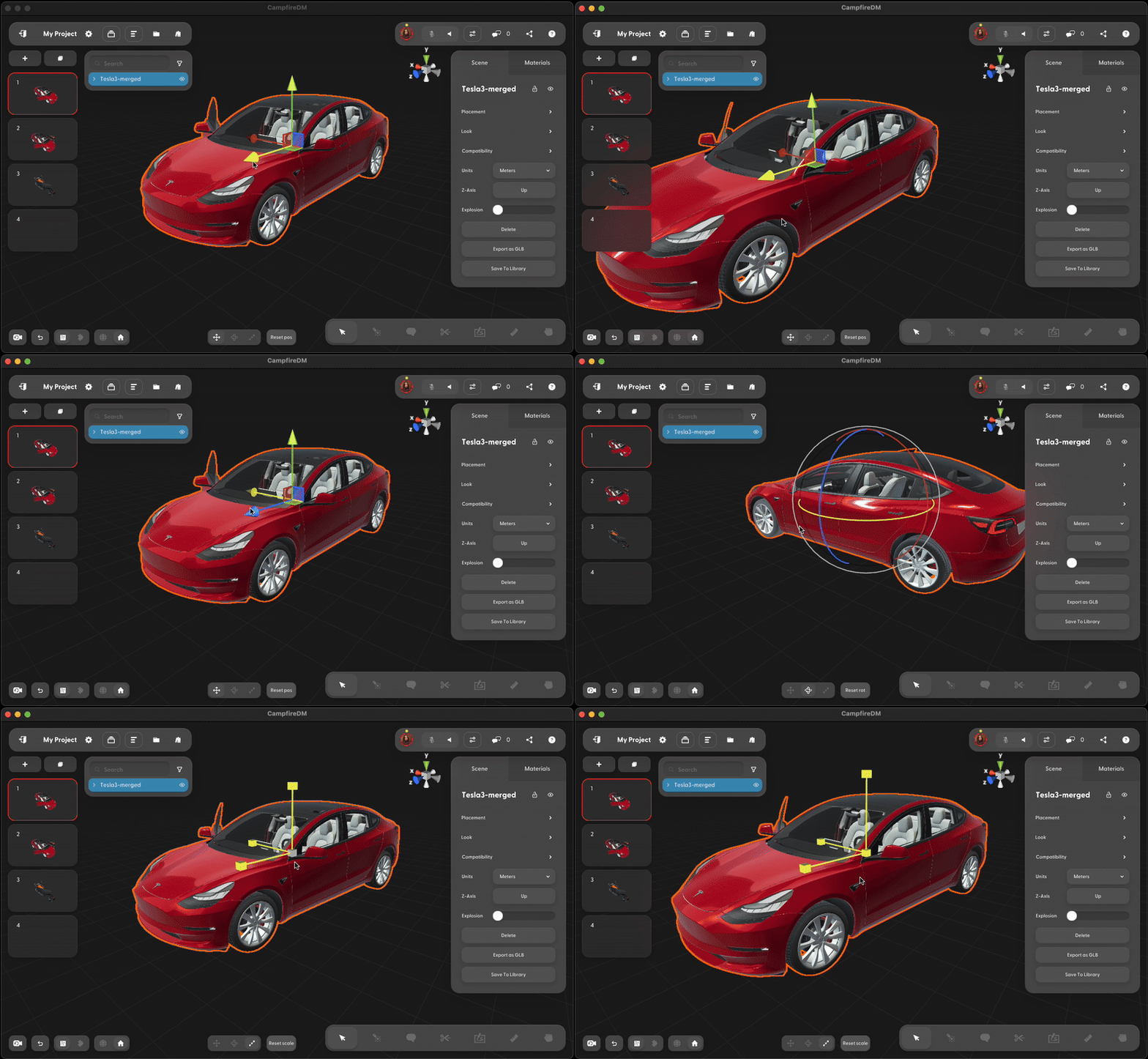
Select your model and toggle between the move, scale, and rotate gizmos at the bottom of the screen to position your model in the scene.
💡
Note: You can copy and paste models using familiar keyboard shortcuts ctrl/⌘+C and ctrl/⌘+V or by right-clicking on the model. Read the Keyboard Shortcuts article for more. Model hierarchy
Use the model hierarchy to select specific parts of a model and hide or show them using the eye icon.
Related FAQ
What 3D file formats does Campfire support? Campfire supports 40+ 3D formats. You can find a full list here.
How do I add my own models to Campfire? Upload models on PC, Mac, iPad, or Quest. Once you create a project, you’ll be able view, edit, and interact with it on any other device supported by Campfire. Read Compose Scenes for more information.
What is the maximum file size supported by Campfire? In the Campfire Starter plan, the maximum file size is 25 MB per file (5 GB total storage). In Campfire Enterprise, there are no limits on maximum size for individual files (20 GB total storage). Click here for pricing information.
What is the maximum polygon count recommended for a model imported to Campfire? Models with high polygon count will require more memory and GPU resources. Generally we do not recommend uploading models greater than 10m polygons.
How do I save my Campfire project? Campfire projects save automatically when updated.
How do I export my Campfire project? Enterprise plan users can export individual models as a GLB file format. Note that you cannot export models from sample projects.
How do I optimize my projects for Quest or iPad? How do I modify the thumbnail for a scene? There are three ways to modify the thumbnail:
- Move, rotate, or scale the model using gizmos (Desktop and iPad)
- Select “Set scene view” in the inspector (Desktop and iPad)
- Explode the model or change its materials (All devices)
Are point cloud PLY files supported? At this time we do not support PLY files that contain point cloud data.
Can I copy and paste models? Select the model and on Windows use ctrl + c to copy and ctrl + v to paste. On a Mac, use cmd + c and cmd + v
You can also, select the model and right click on it to open the context menu. Select Copy to copy the model and then right click anywhere else and select Paste
💡
Note: this is only possible if you are (1) the Presenter and (2) have Editor permissions in the project
Can I use Campfire to view large models on Quest? There are two ways to optimize your rendering performance on Quest.
- Campfire can optimize the model for you. This automatically decimates the model so it can be rendered on Quest, which may result in some loss of fidelity. Read more on how to optimize models for Quest.
- Use Quest Link to connect your Quest 3 to a PC via USB-C cable, and render complex models directly from your PC. This is a great solution for large models with complex textures or thousands of parts. Read more on setting up Quest Link.
How should I bring in multi-file assemblies from Autodesk Inventor? To upload an assembly that refers to multiple part files, all part files must be in the same folder. Use Pack and Go to gather your files into a single folder before adding to Campfire.
- In Inventor, bring up the Pack and Go menu.
- Under Options on the left-hand side, select Copy to Single Path.
- Click Start to create a folder without any sub-folders for the assemblies.
- In Campfire, import the root IAM file using
shift + file open. Read more on multi-file uploads.
What settings should I use to export STEP files from Autodesk Inventor? To bring in the correct materials and colors, review your STEP file export options and ensure Managed Model Based 3D Engineering is selected.
You can also export as GLTF instead of STEP.
Next Steps
Collaborate with others
Applying Materials
Sharing